Dubose Heyward House
Historic house in South Carolina. Built 1919. Added to the National Register in 1971, and a National Historic Landmark.

.jpg/960px-Dubose_Heyward_House_(Charleston).jpg)

What it is
The Dubose Heyward House is a historic house at 76 Church Street in Charleston, South Carolina. Now a wing of a larger house, this modest two-story structure was the home from 1919 to 1924 of author Dubose Heyward (1885–1940), author of Porgy, one of the first works to portray Southern African-Americans in a positive light. The house was declared a National Historic Landmark in 1971.
Text from Wikipedia, CC BY-SA 4.0.
The record
| Register name | Heyward, Dubose, House |
| Property type | Building |
| Address | 76 Church St., Charleston, SC |
| County | Charleston County |
| Listed | Nov 11, 1971 |
| Listed for | Literature |
| Level of significance | National |
| Reference number | 71000749 |
| Built | 1919 · more from the 1910s |
| Type of place | house |
| Designations | National Historic Landmark |
| Contributing resources | 1 building |
The nomination form, the document that argues why this place matters, is in the National Archives: Read the nomination ↗
Visiting
| Address | 76 Church St., Charleston, SC |
| Coordinates | 32.7741° N, 79.9287° W · Directions ↗ |
| Also in Charleston | 111 listed places in Charleston → · walking tours → |
| Nearest national park unit | Fort Sumter and Fort Moultrie National Historical Park · 4 miles · on Park Atlas |
| Federal campgrounds nearby | Buck Hall Recreation Area 28 miles |
Explore
Map
Nearby in Charleston County


.JPG/960px-Nathaniel_Russell_House_(Front_Fa%C3%A7ade).JPG)
Local history books for Charleston
We earn a small commission if you buy through these links. It does not change what we list.
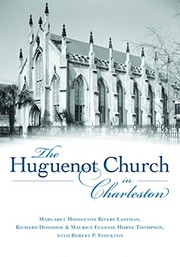 The Huguenot Church in CharlestonMargaret Middleton Rivers Eastman and Richard Donohoe & Maurice Eugenie Horne Thompson, 2018Find at Bookshop.org
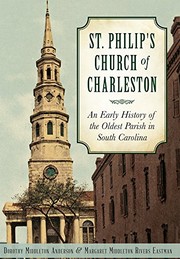 St. Philip's Church of CharlestonDorothy Middleton Anderson and Margaret Middleton Rivers Eastman, 2015Find at Bookshop.org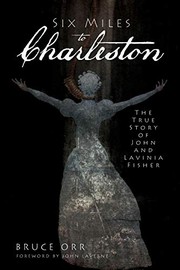
Guidebooks to historic places in South Carolina
Titles come from Open Library's catalog, matched by subject heading or by title.
Reference
Questions people ask
When was Dubose Heyward House listed on the National Register?
Nov 11, 1971. It is also a National Historic Landmark, the higher of the two designations.
Source: National Park Service
When was Dubose Heyward House built?
1919.
Source: Wikidata
Can I visit Dubose Heyward House?
Yes. Dubose Heyward House is recorded as open to the public.
Source: Wikidata
Where is Dubose Heyward House?
76 Church St., Charleston, Charleston County, South Carolina. The nearest national park unit is Fort Sumter and Fort Moultrie National Historical Park, 4 miles away.
Source: Fort Sumter and Fort Moultrie National Historical Park
Where is the nomination form for Dubose Heyward House?
The National Archives holds the nomination form, the document that made the case for listing.
Source: National Archives
Are there campgrounds near Dubose Heyward House?
One federal campground is within reach, Buck Hall Recreation Area, 28 miles away.
Source: Campsite Atlas
Is there cell service at Dubose Heyward House?
FCC coverage maps show Verizon 4G LTE, AT&T 5G, and T-Mobile 5G at the listed point. Coverage indoors and behind old masonry is another matter.
Source: FCC Broadband Map
Is there a wildfire near Dubose Heyward House right now?
1 active incident within 50 miles as of 2026-10-17, nearest C-74 Fm Rx, 30 miles away.
Source: Map
Sources
Location, type and contributing counts come from the National Park Service's National Register spatial data. Listing dates come from the National Register office's spreadsheet where it carries the listing. Construction date, architect, style, photograph and encyclopedia link come from Wikidata and Wikimedia Commons, matched on reference number 71000749. Nothing here is transcribed by hand. The nomination form and photographs ↗ at NPGallery are the original nomination as filed with the National Park Service, and the form is often the best description of the place. The description under "What it is" is the opening of the Wikipedia article, CC BY-SA.